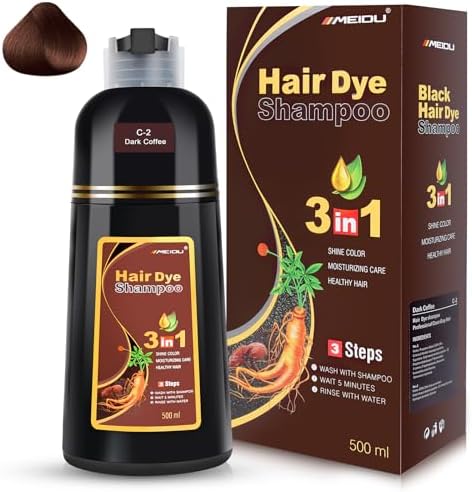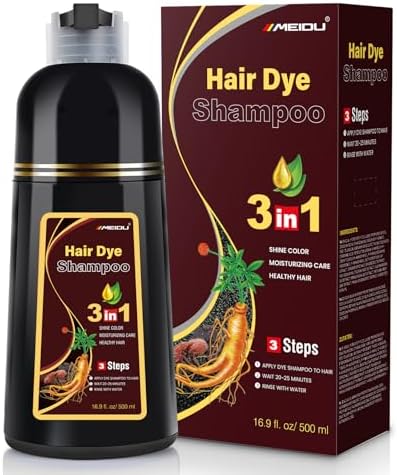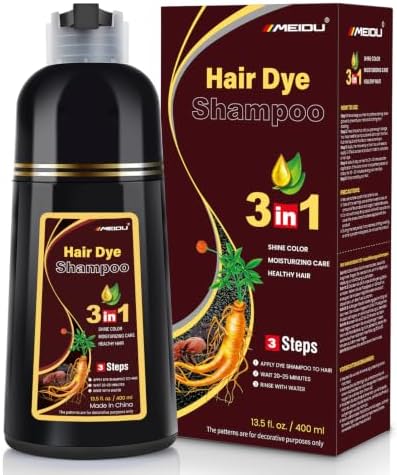
Burgundy Hair Dye Shampoo
$22.49
Unpigmented strands lack the natural melanin base that darkens and anchors synthetic dye molecules. When we blend our permanent color, we formulate for standard hair structures, but white fibers present distinct physical barriers to chemical penetration.
Natural hair contains underlying melanin that works alongside synthetic dyes to build depth. Gray hair contains little to no natural pigment inside the cortex. Because the background is white rather than brown or black, our shades such as Dark Brown or Coffee may deposit as a lighter or warmer tone on those sections.
White strands frequently grow with tightly packed, thicker cuticle layers that resist moisture. The ethanolamine and hydrogen peroxide in our one-pump liquid must soften this exterior before p-phenylenediamine, resorcinol, and m-aminophenol can enter. This structural resistance means gray patches take longer to absorb the mixture during the 20-25 minutes printed processing time.
Localized white zones around the hairline often stay lighter than the surrounding hair after application. These areas typically have the lowest natural pigment density and the coarsest strand texture on the scalp. Color deposited on pure white temples will visually reflect more light than color deposited on pigmented strands beside them.
Selecting deeper options from our nine shades, such as Black or Dark Coffee, deposits a higher density of pigment molecules across contrasting sections. Starting the application on the most resistant white areas gives those fibers the full duration of the 20-25 minutes window. A 48 hours skin test remains necessary before the first use of any bottle.
Using our wash-in conditioning mask after rinsing helps smooth down raised cuticle scales on coarse fibers. The keratin mask helps with post-dye strand feel but does not change the amount of oxidative dye deposited inside the cortex. Coarse white hair maintains its internal structure even after dye processing.
Final color depth depends on the starting percentage of unpigmented hair, strand thickness, and individual fiber porosity. We state what is in the liquid we bottle, but we do not promise total gray masking, uniform tone across patchy hair, or identical results on every head.