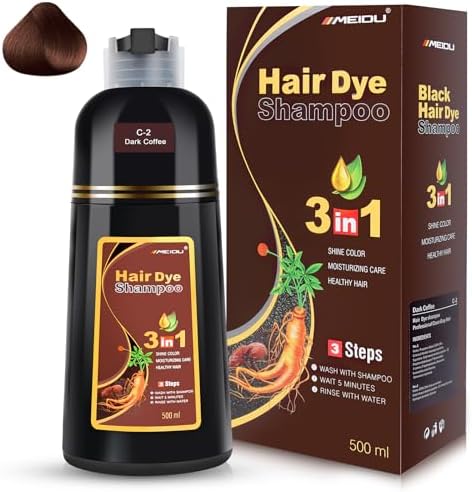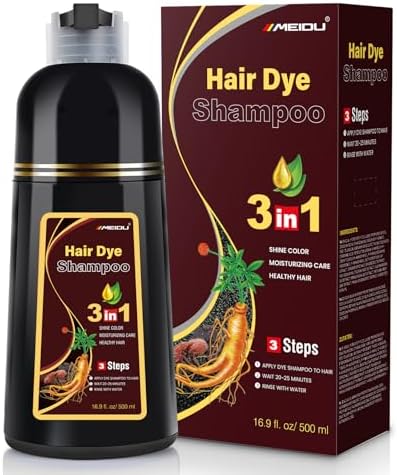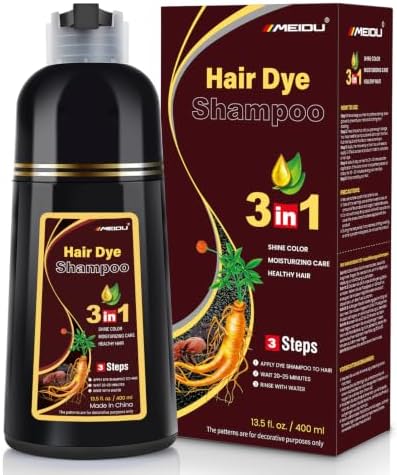
Burgundy Hair Dye Shampoo
$22.49
Hair color products fall into distinct chemical categories that determine how they interact with the hair fiber. We explain what each category does, where our shampoo-style bottle sits among them, and how to read an ingredient list to know what you are putting on your scalp.
Semi-permanent colors coat the outside of the hair shaft without lifting natural pigment, which means they rinse away over several washes. Demi-permanent formulas use a low-strength alkaline agent to deposit color slightly under the cuticle. Permanent color relies on an alkalizer to open the cuticle and an oxidizer to develop dye precursors deep within the cortex. Toners, such as the purple toner in 500 ml on our mixing bench, exist to neutralize unwanted warm brassy tones after lightening rather than to alter the base depth.
Our bottles in 400 ml and 500 ml dispense one liquid from a pump, yet the formula is a permanent oxidative dye. The ingredient list carries p-phenylenediamine, resorcinol, m-aminophenol, and ethanolamine alongside hydrogen peroxide. These chemicals react inside the hair fiber during the 20-25 minutes of processing time. This is an oxidative process, not a temporary herbal rinse or surface stain.
White and gray strands lack melanin and possess a tight cuticle structure that resists simple direct dyes. A reader looking to color stubborn gray roots at the parting needs an oxidative formula that can open the cuticle and deposit pigment inside the fiber. Semi-permanent washes often slide off non-pigmented hair quickly. Permanent oxidative color changes the internal structure of the strand, which means the altered color remains until the hair grows out or is cut.
Words on the front of a carton that mention plant extracts do not make a product non-oxidative or chemical-free. A dye that permanently changes hair shade requires active synthetic precursors and an oxidizing agent to function. Herbal phrasing describes secondary additives, not the core dye mechanism. Relying on botanical claims instead of the active chemistry can lead to severe allergic contact reactions.
Turn the package over to examine the chemical nomenclature rather than the brand claims. Look for aromatic amines like p-phenylenediamine (PPD), resorcinol, and hydrogen peroxide. If these appear, the product is an oxidative dye and requires precautions. You must perform a skin test 48 hours before the first use, exactly as printed on our packaging, because sensitivity to these active agents can develop at any time.
Final results depend entirely on the head it is on, your starting hair texture, and your history of prior chemical processing. We do not promise uniform coverage or zero damage, and anyone experiencing scalp irritation should consult a doctor rather than our bench.